Richard Dawkins' brilliant reformulation of the theory of natural selection has the rare distinction of having provoked as much excitement and interest outside the scientific community as within it. His theories have helped change the whole nature of the study of social biology, and have forced thousands of readers to rethink their beliefs about life.
In his internationally bestselling, now classic volume, The Selfish Gene, Dawkins explains how the selfish gene can also be a subtle gene. The world of the selfish gene revolves around savage competition, ruthless exploitation, and deceit, and yet, Dawkins argues, acts of apparent altruism do exist in nature. Bees, for example, will commit suicide when they sting to protect the hive, and birds will risk their lives to warn the flock of an approaching hawk.
This revised edition of Dawkins' fascinating book contains two new chapters. One, entitled "Nice Guys Finish First," demonstrates how cooperation can evolve even in a basically selfish world. The other new chapter, entitled "The Long Reach of the Gene," which reflects the arguments presented in Dawkins' The Extended Phenotype, clarifies the startling view that genes may reach outside the bodies in which they dwell and manipulate other individuals and even the world at large. Containing a wealth of remarkable new insights into the biological world, the second edition once again drives home the fact that truth is stranger than fiction.

Mostrando entradas con la etiqueta science. Mostrar todas las entradas
Mostrando entradas con la etiqueta science. Mostrar todas las entradas
jueves, 4 de abril de 2013


martes, 25 de diciembre de 2012
Reappraisal Defuses Strong Emotional Responses to Israel-Palestine Conflict
 Reappraisal is a widely-used cognitive strategy that can help people to regulate their reactions to emotionally charged events. Now, new research suggests that reappraisal may even be effective in changing people’s emotional responses in the context of one of the most intractable conflicts worldwide: the Israeli-Palestinian conflict.
“Negative intergroup emotions play a crucial role in decisions that perpetuate intractable conflicts,” observes lead researcher Eran Halperin of the New School of Psychology at the Interdisciplinary Center in Israel.
With this in mind, Halperin and his colleagues wondered whether cognitive reappraisal, a strategy that involves changing the meaning of a situation to change the emotional response to it, might be effective in diminishing such negative intergroup emotions.
Their research is published in Psychological Science, a journal of the Association for Psychological Science.
In the first study, 39 Jewish Israeli participants viewed a series of photos that were deliberately selected to induce anger. Some of the participants were trained in cognitive reappraisal — they were taught to respond to the images like scientists, considering them objectively, analytically, and in a cold and detached manner. The other participants received no instructions.
Then all of the participants watched an anger-inducing presentation. The four-minute presentation — with pictures, text, and music — described Israel’s disengagement from the Gaza Strip and the Palestinian response, including the launching of rockets, the election of Hamas, and the kidnapping of an Israeli soldier. Before watching, participants were asked to apply the reappraisal technique they had learned.
Halperin and colleagues found that participants who were taught to reappraise their emotional responses expressed less anger towards Palestinians, greater support for conciliatory policies, and less support for aggressive policies than the participants who received no training. The results suggest that the increase in support for conciliatory policies could be explained — at least in part — by decreased intergroup anger.
To examine whether these findings would extend to conflict-related events as they occurred in the real world, Halperin and colleagues conducted a second study.
The researchers knew that Palestinian president Mahmoud Abbas would be presenting a bid to the United Nations seeking full UN membership for Palestine in September 2011. They recruited 60 Jewish Israelis to participate in a study and, six days before the UN bid, they asked the participants to rate their current positive and negative emotions and their general support for different types of policies.
Once again, the researchers trained half of the participants to use cognitive reappraisal. Over the course of the following week, the participants received three text message reminders to use the technique they had learned. A week after the training and two days after the bid, the researchers assessed participants’ emotional and political reactions.
As Halperin and colleagues expected, there was no difference in negative emotions among the participants before training took place. A week after training, however, the reappraisal participants reported lower levels of negative emotions toward Palestinians. The data suggest that the reappraisal actually made them more supportive of conciliatory policies and less supportive of aggressive policies, effects which could be attributed to a decrease in negative emotions.
Even more surprising, however, was the fact that these results held up five months later when the participants were asked to complete a brief questionnaire by an unfamiliar experimenter.
“We consider our findings to be preliminary yet provocative,” write Halperin and colleagues. “Political positions in conflict situations are considered rigid, well entrenched, and driven mainly by ideological rather than emotional considerations. It is therefore surprising to see shifts in these attitudes based on such minimal interventions.”
These results provide evidence that emotion regulation strategies like reappraisal can influence intergroup emotions, not just intrapersonal emotions, and can even shape political reactions.
The researchers believe that this research could eventually lead to interventions that incorporate cognitive reappraisal as a way of increasing support for peace in long-term conflicts.
Study co-authors include Roni Porat of The Hebrew University and Interdisciplinary Center – Herzliya (Israel); Maya Tamir of The Hebrew University (Israel); and James Gross of Stanford University.
###
For more information about this study, please contact: Eran Halperin at eran.halperin@idc.ac.il.
The APS journal Psychological Science is the highest ranked empirical journal in psychology. For a copy of the article "Can Emotion Regulation Change Political Attitudes in Intractable Conflicts? From the Laboratory to the Field" and access to other Psychological Science research findings, please contact Anna Mikulak at 202-293-9300 or amikulak@psychologicalscience.org.
viernes, 16 de noviembre de 2012
A psychologist with schizophrenia talks about what helps him function effectively
Taken from
the book: “Abnormal Psychology” by David Homes. Harpers Collins. ©1991.
 Frederick
J. Frese III is a psychologist who has struggled with schizophrenia for over 20
years. He described the onset of his symptoms and talked about his occasional
“breakdowns”. Most of the time, however, he functions effectively, and in the
following comments he describes some of the things that help. Dr. Frese
believes it is important that the person whit schizophrenia be aware of the
nature of the problem in order to develop effective coping strategies. He said:
Person whit
schizophrenia needs to carefully study how they function. Until they can
identify their deficits, it is very difficult to start building compensatory
mechanisms that will enable them to function better… persons recovering from
schizophrenia should be able to identify, and be on the lookout for, the sorts
of persons, places, and things that can cause the type of stress that may
precipitate their breakdowns. They should know to get to environments that are
helpful.
Just as a
diabetic must take action to control his or her blood-sugar level, persons recovering
from schizophrenia must learn to monitor and take measures to counteract an
imbalance in subcortical neurochemical activity. But unlike diabetes,
schizophrenia seriously interferes with rational processes, and once the
irrationality begins, the person may have great difficulty in acting in a
rational or responsible manner.
To overcome
the irrationality, Dr. Frese also emphasizes the importance of feedback from
others:
Because of
our disability, it is very difficult for us to know what we do that normal do
not understand. Therefore, it is very helpful to have a trustworthy normal
around to let us know what it is about our thoughts that perhaps it would be
better not to share with everyone else. In my case, my wife constantly gives me
feedback whenever I am saying or doing things that normal people may consider
bizarre or offensive. Some things are rather obvious. If you are hearing
voices, it is generally best not to talk back to them while normal are around. If
your thoughts are dominated by the importance of the colors or similar sounds
in the environment, you probably do not want to reveal too much about this to
others.
Whit help,
other disabled persons learn to compensate for their disabilities and frequently
lead dignified, productive lives. The blind learn to use canes and seeing-eye
dogs; those with limited use of their legs learn to use crutches and
wheelchairs. For the mentally ill, however, the parameters of our disability
are often not easily defined. We need help and feedback so we can understand
exactly the nature of our disability.
Whit regard
to the results of psychological testing, Dr. Frese said:
Assessment results
that us we have “gross pathology”, “extreme confusion” or “diffuse brain damage”
are not really helpful. We need very specific information. Perhaps new assessment
instruments need to be developed, possibly with input from us, so that we can
better learn how it is that we are different from others or where our
psychological blind spots are.
Unfortunately,
feedback is not always enough. Sometimes the symptoms overwhelm the person, who
then loses the ability to function. When that occurs, some flexibility on the
part of other people in the environment is necessary. Dr. Frese commented:
Schizophrenia
tends to be an episodic disorder. We are going to have periodic breakdowns. This
makes holding employment very difficult because the usual practice is to
terminate employees who require frequent periods of leave. Work for us should
be structured so that our disabilities are taken into account. Many of us are
well educated and/or have useful skills when we are not having episodes. Why can´t
jobs be structured for us so that our episodic breakdowns do not automatically
result in our loss of employments? As with those in the general population, we
like and needs to be a little more flexible in understanding that we are going
to behave strangely from time and there are going to be time when we do not
function well at all.
"Abnormal Psychology" by David Holmes. Part 4, p. 303. Case study 15.1.
viernes, 18 de mayo de 2012
Espacio y Movimiento de la Locura: El péndulo de la Historia (Chile)
Por: Alfredo Roca.
Medico Psiquiatra, Universidad de Chile.
Doctor en Medicina, Universidad Libre de Bruselas, Bélgica. Epidemiología.
Universidad Católica de Lovaina, Bélgica. Profesor de la Universidad de Playa
Ancha y Profesor asociado de la Universidad de Valparaíso. E-mail: aroca@upa.cl
Este artículo se referirá al espacio social de la locura y a sus movimientos,
en Chile, desde la Colonia hasta el siglo XXI. Intentaremos en lo que sigue,
referirnos a la psiquiatría en Chile, teniendo en cuenta el movimiento
desarrollado en el tiempo largo, “la longue durée”. Esto nos permitirá observar
los movimientos en la historia de la locura, en los últimos siglos. Por otra
parte, abordaremos la locura desde su propio movimiento (intrínseco) en los
espacios que se le asignan. Decimos
espacios, porque ellos son múltiples, pero los diferenciaremos en espacio
interno, intramuros o institucional y espacio externo o extramuros.
jueves, 26 de abril de 2012
Dr. Robert Spitzer Apologizes to Gay Community for Infamous ‘Ex-Gay’ Study
Dr. Robert Spitzer Apologizes to Gay Community for Infamous ‘Ex-Gay’ Study
April 25th, 2012 by John M. Becker. Truth Wins Out.
Earlier this month, Dr. Spitzer dealt “ex-gay” programs a fatal blow by officially renouncing his study in the American Prospect article he mentions in his letter above. That renunciation kicked out the final leg from the stool on which the proponents of ‘ex-gay’ therapy based their already shaky claims of success, or as Arana put it, removed from the ex-gay “fringe movement. . . its only shred of scientific support.”
April 25th, 2012 by John M. Becker. Truth Wins Out.
Today, in a letter to Dr. Ken Zucker obtained exclusively by Truth Wins Out, Dr. Robert Spitzer made an unprecedented apology to the gay community — and victims of reparative therapy in particular — for his infamous, now-repudiated 2001 study that claimed some “highly motivated” homosexuals could go from gay to straight:
Several months ago I told you that because of my revised view of my 2001 study of reparative therapy changing sexual orientation, I was considering writing something that would acknowledge that I now judged the major critiques of the study as largely correct.

After discussing my revised view of the study with Gabriel Arana, a reporter for American Prospect, and with Malcolm Ritter, an Associated Press science writer, I decided that I had to make public my current thinking about the study. Here it is.
Basic Research Question. From the beginning it was: “can some version of reparative therapy enable individuals to change their sexual orientation from homosexual to heterosexual?” Realizing that the study design made it impossible to answer this question, I suggested that the study could be viewed as answering the question, “how do individuals undergoing reparative therapy describe changes in sexual orientation?” – a not very interesting question.
The Fatal Flaw in the Study – There was no way to judge the credibility of subject reports of change in sexual orientation. I offered several (unconvincing) reasons why it was reasonable to assume that the subject’s reports of change were credible and not self-deception or outright lying. But the simple fact is that there was no way to determine if the subject’s accounts of change were valid.
I believe I owe the gay community an apology for my study making unproven claims of the efficacy of reparative therapy. I also apologize to any gay person who wasted time and energy undergoing some form of reparative therapy because they believed that I had proven that reparative therapy works with some “highly motivated” individuals.
Robert Spitzer. M.D.Zucker, to whom Spitzer’s letter is addressed, is the editor of the Archives of Sexual Behavior, the journal in which Spitzer’s study was originally published in 2001. At that time, the study was a surprise that created a media firestorm which captured the nation’s attention. Dr. Spitzer was the last person in America one would have expected to produce a study bolstering the claims of ‘ex-gay’ activists — after all, he had previously led the charge in 1972-73 to remove homosexuality from the list of mental disorders in the Diagnostic and Statistical Manual (DSM) of the American Psychiatric Association.
Emeritus Professor of Psychiatry,
Columbia University
Earlier this month, Dr. Spitzer dealt “ex-gay” programs a fatal blow by officially renouncing his study in the American Prospect article he mentions in his letter above. That renunciation kicked out the final leg from the stool on which the proponents of ‘ex-gay’ therapy based their already shaky claims of success, or as Arana put it, removed from the ex-gay “fringe movement. . . its only shred of scientific support.”
Dr. Spitzer’s apology to the victims of “pray away the gay” therapy and the greater LGBT community marks a watershed moment in the fight against the “ex-gay” myth. We commend him for it, because not only will it solidify his legacy as a respected doctor and significant historical figure, but it will help to greatly hasten the day when the scourge that is reparative therapy is eradicated forever and LGBT people can live openly, honestly, and true to themselves.
lunes, 16 de abril de 2012
Prosopagnosia: Whose face is that?
Prosopagnosia: Whose face is that?
Published on April 15, 2012 by Jenni Ogden, Ph.D. Psychology Today.
 How many of you find movies and TV shows confusing because the same blonde woman appears to be both the murderer and the murdered? And then she appears again as the detective! If this is a common problem for you, and your partner is constantly having to explain who is who, you may have a mild form of prosopagnosia
Sacks’s difficulties are at the severe end of the spectrum of congenital face and place recognition problems. Most non brain-damaged people with prosopagnosia will be much less affected. Probably people very well known to them will be readily recognized, and it is only when they meet people they don’t see very often that they have difficulty. If your only problem is keeping track of who is who in movies, then your prosopagnosia is at the very mild end of the spectrum, and would likely not even be significant enough to earn the prosopagnosia label .
Congenital face-blindness appears to be inherited, and affects around 1 in every 50 people. So if this is you, you are not alone: in the USA you join a group of more than 6 million. It behoves film makers to make their characters as different as possible, especially in those complex murder mysteries! If you think you might have this problem you can test yourself by signing on at www.faceblind.org/facetests/
My association with prosopagnosia has been with the rare, acquired form of the disorder, following brain damage. These cases are fascinating—at least to the researcher! Most patients with acquired prosopagnosia have damage to both occipital lobes, often extending to the pathways to the temporal “memory” lobes as well. I have a patient, Michael, who crashed his motorcycle and was in a coma for many months. On regaining consciousness, he was found to be totally blind, a consequence of damage to the visual cortex of both his occipital lobes. But, to everyone’s amazement, many years later Michael began to see dim lights, and an intensive rehabiitation programme was begun to try and bring back his sight. He slowly began to improve and soon could see quite well, but in his central vision only; his peripheral sight was lost. However, although he could describe the shapes of what he was seeing, and even copy pictures reasonably accurately (although painstakingly slowly), he had no idea what he was seeing or drawing. He had visual object agnosia; an inability to know what an object was on sight. He also had no idea whose face he was looking at. Show him a picture of a cat’s face and his mother’s face and he couldn’t tell them apart.
In stark contrast, he could read letters and words. In these rare cases of acquired prosopagnosia it has been found that some prosopagnosics also have dyslexia; that is they cannot recognize words (but can recognize objects), and other prosopagnosics have visual object agnosia (but can recognize words). One theory is that this depends on which occipital lobe is most severely damaged: if it is the right one, in the “‘visuospatial” hemisphere, then the patient will have visual object agnosia, and if it is the left one, in the language hemisphere, the patient will have dyslexia.
Prospagnosia and visual object agnosia are purely visual disorders. If Michael’s mother spoke, he immediately recognized her. If I showed him a bunch of keys, he didn’t know what they were, but if I jangled them or put them in his hand, he immediately recognized them.
Michael had other even rarer visual disorders; he couldn’t recognize colors or even imagine them from his past memories of what color an object or animal was. He said a sparrow—a common, nondescript brown bird— was blue. He had also lost his ability to form or "see" visual images: he had lost his mind’s eye. Related to this, he insisted he never dreamed, at least in visual images. But his most disabling problem was his loss of his entire past life: he could not remember any personal event that had ever happened to him, including his 21st birthday, a large gathering with all his friends, with a live band, dancing, a feast, and an enormous birthday cake, just three years before his accident. After many experiments I finally concluded this dramatic autobiographical memory loss was a consequence of how he had stored his pre-accident memories; predominantly as visual images. Thus when he tried to recall them, because he had no visual imagery, it was as if he had no memory of the event. This theory was supported by the fact that he could remember sounds from his past; for example when he woke up from his coma, he was able to identify boats in the harbor nearby the hospital from the sounds of their individual fog horns (he had worked previously as a seaman). He also remembered songs from his past, found the smell of motorcycles intoxicating and nostalgic, and told me he could remember what making love felt like (but had no recall of with whom he had made it)!
So what about his ability to form new memories? His brain damage did result in some separate problems with learning new information, but these were mild. For example, if I phone him out of the blue, perhaps years after we last talked, he immediately recognizes my voice and recalls many of our past experiments. He is able to store and recall new events, but they are non-visual memories, similar, I imagine, to the memories of a blind person. This is the way he described a barbeque he shared with friends four days earlier. “I had a ball. It was a beautiful, sunny day after all that rain we’ve been having. They had some really good spicy sausages and of course I got drunk later in the evening.” No amount of coaxing could bring forth any visual descriptions.
Michael had physical problems as well; he had lost an arm in the accident, and because of multiple fractures in his legs he walked with a severe limp. He had every excuse to lead an isolated, miserable existence, but there was never any chance of that. He proved a wonderful research participant; he loved participating in experiments and testing himself. He lived in his own small house, with a helper coming in daily, and his faithful friends took him places he couldn’t have managed by himself. A highlight was an overseas trip from New Zealand to the USA. With Michael in the sidecar, his friend Lou drove his Harley-Davidson the length of Route 66, including a few side trips. On their return, Lou gave him a photograph album to remind Michael of their trip, but then realized that was no use; Michael couldn’t recognize the pictures. So he put together a series of musical CDs beginning with “Leaving on a Jet Plane,” and including many songs like “New Orleans,” “Needles and Pins” (a reference to Michael’s numb backside when they’d been travelling for a long time), and “Grand Canyon.” The CD finished, of course with “Harley-Davidson Blues.”
Published on April 15, 2012 by Jenni Ogden, Ph.D. Psychology Today.
 How many of you find movies and TV shows confusing because the same blonde woman appears to be both the murderer and the murdered? And then she appears again as the detective! If this is a common problem for you, and your partner is constantly having to explain who is who, you may have a mild form of prosopagnosia
Until quite recently, it was thought that this was a rare neurological disorder that occurred only after brain damage or disease, usually to the occipital (visual) lobes at the back of the brain, or to the adjacent temporal lobes. But it is now a matter of scientific record that mild forms of developmental or congenital prosopagnosia occur in the normal, healthy population. Oliver Sacks, the neurologist and author of so many amazing books about brain damaged patients, has quite a severe case of congenital prosopagnosia. He describes his symptoms in his book, “The Minds Eye,” in the chapter called “Face-Blind.” For example, on one occasion he was to meet his personal assistant of six years in his publisher’s office. He sat in the waiting room without realizing that the young woman also sitting there and smiling at him was his assistant! After about five minutes she told him who she was; she’d been testing him to see how long he took to recognize her. Like many people with prosopagnosia, Sacks also has a problem with recognizing places: he can go for a walk around the block his house is in, and then be unable to find it: he walks past it time and again.
Congenital face-blindness appears to be inherited, and affects around 1 in every 50 people. So if this is you, you are not alone: in the USA you join a group of more than 6 million. It behoves film makers to make their characters as different as possible, especially in those complex murder mysteries! If you think you might have this problem you can test yourself by signing on at www.faceblind.org/facetests/
My association with prosopagnosia has been with the rare, acquired form of the disorder, following brain damage. These cases are fascinating—at least to the researcher! Most patients with acquired prosopagnosia have damage to both occipital lobes, often extending to the pathways to the temporal “memory” lobes as well. I have a patient, Michael, who crashed his motorcycle and was in a coma for many months. On regaining consciousness, he was found to be totally blind, a consequence of damage to the visual cortex of both his occipital lobes. But, to everyone’s amazement, many years later Michael began to see dim lights, and an intensive rehabiitation programme was begun to try and bring back his sight. He slowly began to improve and soon could see quite well, but in his central vision only; his peripheral sight was lost. However, although he could describe the shapes of what he was seeing, and even copy pictures reasonably accurately (although painstakingly slowly), he had no idea what he was seeing or drawing. He had visual object agnosia; an inability to know what an object was on sight. He also had no idea whose face he was looking at. Show him a picture of a cat’s face and his mother’s face and he couldn’t tell them apart.
In stark contrast, he could read letters and words. In these rare cases of acquired prosopagnosia it has been found that some prosopagnosics also have dyslexia; that is they cannot recognize words (but can recognize objects), and other prosopagnosics have visual object agnosia (but can recognize words). One theory is that this depends on which occipital lobe is most severely damaged: if it is the right one, in the “‘visuospatial” hemisphere, then the patient will have visual object agnosia, and if it is the left one, in the language hemisphere, the patient will have dyslexia.
Prospagnosia and visual object agnosia are purely visual disorders. If Michael’s mother spoke, he immediately recognized her. If I showed him a bunch of keys, he didn’t know what they were, but if I jangled them or put them in his hand, he immediately recognized them.
Michael had other even rarer visual disorders; he couldn’t recognize colors or even imagine them from his past memories of what color an object or animal was. He said a sparrow—a common, nondescript brown bird— was blue. He had also lost his ability to form or "see" visual images: he had lost his mind’s eye. Related to this, he insisted he never dreamed, at least in visual images. But his most disabling problem was his loss of his entire past life: he could not remember any personal event that had ever happened to him, including his 21st birthday, a large gathering with all his friends, with a live band, dancing, a feast, and an enormous birthday cake, just three years before his accident. After many experiments I finally concluded this dramatic autobiographical memory loss was a consequence of how he had stored his pre-accident memories; predominantly as visual images. Thus when he tried to recall them, because he had no visual imagery, it was as if he had no memory of the event. This theory was supported by the fact that he could remember sounds from his past; for example when he woke up from his coma, he was able to identify boats in the harbor nearby the hospital from the sounds of their individual fog horns (he had worked previously as a seaman). He also remembered songs from his past, found the smell of motorcycles intoxicating and nostalgic, and told me he could remember what making love felt like (but had no recall of with whom he had made it)!
So what about his ability to form new memories? His brain damage did result in some separate problems with learning new information, but these were mild. For example, if I phone him out of the blue, perhaps years after we last talked, he immediately recognizes my voice and recalls many of our past experiments. He is able to store and recall new events, but they are non-visual memories, similar, I imagine, to the memories of a blind person. This is the way he described a barbeque he shared with friends four days earlier. “I had a ball. It was a beautiful, sunny day after all that rain we’ve been having. They had some really good spicy sausages and of course I got drunk later in the evening.” No amount of coaxing could bring forth any visual descriptions.
Michael had physical problems as well; he had lost an arm in the accident, and because of multiple fractures in his legs he walked with a severe limp. He had every excuse to lead an isolated, miserable existence, but there was never any chance of that. He proved a wonderful research participant; he loved participating in experiments and testing himself. He lived in his own small house, with a helper coming in daily, and his faithful friends took him places he couldn’t have managed by himself. A highlight was an overseas trip from New Zealand to the USA. With Michael in the sidecar, his friend Lou drove his Harley-Davidson the length of Route 66, including a few side trips. On their return, Lou gave him a photograph album to remind Michael of their trip, but then realized that was no use; Michael couldn’t recognize the pictures. So he put together a series of musical CDs beginning with “Leaving on a Jet Plane,” and including many songs like “New Orleans,” “Needles and Pins” (a reference to Michael’s numb backside when they’d been travelling for a long time), and “Grand Canyon.” The CD finished, of course with “Harley-Davidson Blues.”
jueves, 12 de abril de 2012
Violent video game exposure and aggression
Violent video game exposure and aggression.
N. L. Carnagey, C. Anderson.
Department of Psychology
Iowa State University, Ames, IA, USA
Minerva Psichiatric 2004;45:1-18
Over the last 30 years, the video game industry has grown into a multi-billion dollar business. More children and adults are spending time playing computer games, consoles games, and online games than ever before. Violence is adominant theme in most of the popular video games. This article reviews the current literature on effects of violent video game exposure on aggression-related variables. Exposure to violent video games causes increases in aggressive behavior, cognitions, and affect. Violent video game exposure also causes increases in
physiological desensitization to real-life violence and decreases in helping behavior. The current video game literature is interpreted in terms of the general aggression model (GAM). Differences between violent video game exposure and violent television are also discussed.
Key words: Child - Video games - Violence - Aggression.
Download.
N. L. Carnagey, C. Anderson.
Department of Psychology
Iowa State University, Ames, IA, USA
Minerva Psichiatric 2004;45:1-18
Over the last 30 years, the video game industry has grown into a multi-billion dollar business. More children and adults are spending time playing computer games, consoles games, and online games than ever before. Violence is adominant theme in most of the popular video games. This article reviews the current literature on effects of violent video game exposure on aggression-related variables. Exposure to violent video games causes increases in aggressive behavior, cognitions, and affect. Violent video game exposure also causes increases in
physiological desensitization to real-life violence and decreases in helping behavior. The current video game literature is interpreted in terms of the general aggression model (GAM). Differences between violent video game exposure and violent television are also discussed.
Key words: Child - Video games - Violence - Aggression.
Download.
sábado, 7 de abril de 2012
Psychological Testing May Predict Success in Soccer
 Psychological Testing May Predict Success in Soccer
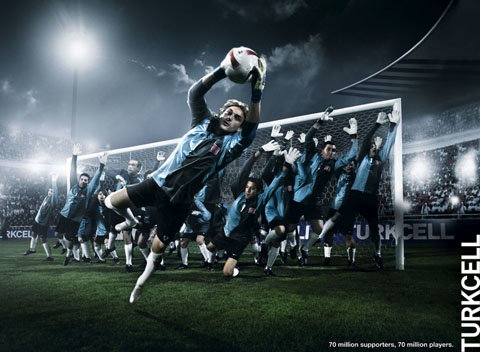
ScienceDaily (Apr. 5, 2012) — Measuring what are known as 'executive functions', which reflect the cognitive ability to deal with sudden problems, may make it possible to predict how good an elite soccer player will become in the future. This has been shown by a new study from Karolinska Institutet. Scientists believe for the first time that they have found the scientific key to what has previously been described as 'game intelligence' in successful soccer players.
It has long been known that physical ability and ball sense are not enough to become really good at soccer. A third vital component has often been mentioned: game intelligence, which is the ability to 'read' the play, to be always in the right place at the right time, and steal goals. Many people have regarded game intelligence to be almost a magical ability, something that is impossible to measure.
The scientists at Karolinska Institutet, however, claim that game intelligence is hardly mystical, and that it can be understood from a scientific perspective. It is, rather, an example of something that cognitive scientists call executive functions, which encompass the ability to be immediately creative, to be able to see new solutions to problems, to change tactics rapidly and to revise previous behaviour that has proved not to work.
"Our brains have specific systems that process information in just this manner, and we have validated methods within cognitive research to measure how well the executive functions work in an individual," says Dr Predrag Petrovic at the Department of Clinical Neuroscience.
Predrag Petrovic and his colleagues report in one study, to be published in the on-line scientific journal PLoS ONE, tests of certain executive functions in soccer players in Allsvenskan (the highest Swedish league) and in Division 1 (the league under Allsvenskan), a total of 57 elite soccer players. The scientists found that soccer players in both groups performed much better in tests of executive functions than the general population. And they found that players in Allsvenskan achieved much better results in these tests than players in Division 1.
The study then compared the test results with the performance of the players on the field. The scientists followed several of the soccer players for some years and recorded the number of goals and the number of assists each player made. In this way, each player was awarded points related to his or hers performance on the field. A clear correlation appeared between the results of the tests of executive functions and the number of points obtained on the soccer field (when corrected for such factors as a player's position and age).
It was thus shown that the best players had also performed best on the tests of executive functions. These results are unique, since they are based on scientifically standardised tests. Previously, researchers have used either specific tests from which it has not been possible to generalise the results, or studied specifically how heading the ball can cause cognitive abilities to deteriorate.
"We can imagine a situation in which cognitive tests of this type become a tool to develop new, successful soccer players. We need to study whether it is also possible to improve the executive functions through training, such that the improvement is expressed on the field. But there is probably a hereditary component, and a component that can be developed by training," says Torbjörn Vestberg, psychologist and a member of the research group that carried out the study.
Issues for DSM-V: Internet Addiction
Issues for DSM-V: Internet Addiction
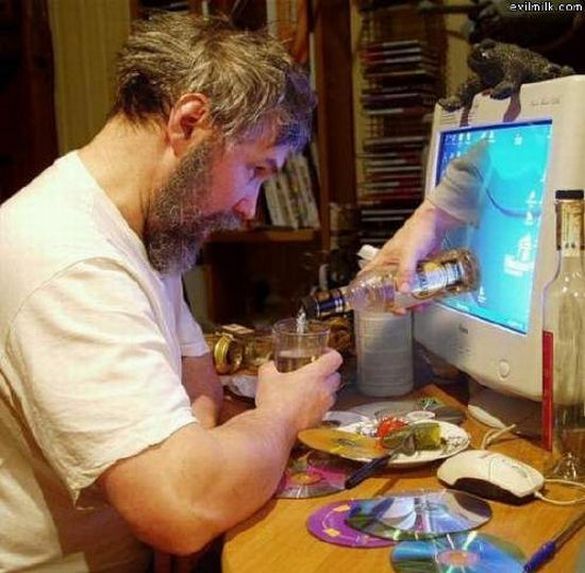
 Internet addiction appears to be a common disorder that merits inclusion in DSM-V. Conceptually, the diagnosis is a compulsive-impulsive spectrum disorder that involves online and/or offline computer usage (1, 2) and consists of at least three subtypes: excessive gaming, sexual preoccupations, and e-mail/text messaging (3). All of the variants share the following four components: 1) excessive use, often associated with a loss of sense of time or a neglect of basic drives, 2) withdrawal, including feelings of anger, tension, and/or depression when the computer is inaccessible, 3) tolerance, including the need for better computer equipment, more software, or more hours of use, and 4) negative repercussions, including arguments, lying, poor achievement, social isolation, and fatigue (3, 4).
 Internet addiction appears to be a common disorder that merits inclusion in DSM-V. Conceptually, the diagnosis is a compulsive-impulsive spectrum disorder that involves online and/or offline computer usage (1, 2) and consists of at least three subtypes: excessive gaming, sexual preoccupations, and e-mail/text messaging (3). All of the variants share the following four components: 1) excessive use, often associated with a loss of sense of time or a neglect of basic drives, 2) withdrawal, including feelings of anger, tension, and/or depression when the computer is inaccessible, 3) tolerance, including the need for better computer equipment, more software, or more hours of use, and 4) negative repercussions, including arguments, lying, poor achievement, social isolation, and fatigue (3, 4).
Some of the most interesting research on Internet addiction has been published in South Korea. After a series of 10 cardiopulmonary-related deaths in Internet cafés (5) and a game-related murder (6), South Korea considers Internet addiction one of its most serious public health issues (7). Using data from 2006, the South Korean government estimates that approximately 210,000 South Korean children (2.1%; ages 6—19) are afflicted and require treatment (5). About 80% of those needing treatment may need psychotropic medications, and perhaps 20% to 24% require hospitalization (7).
Since the average South Korean high school student spends about 23 hours each week gaming (8), another 1.2 million are believed to be at risk for addiction and to require basic counseling. In particular, therapists worry about the increasing number of individuals dropping out from school or work to spend time on computers (5). As of June 2007, South Korea has trained 1,043 counselors in the treatment of Internet addiction and enlisted over 190 hospitals and treatment centers (7). Preventive measures are now being introduced into schools (9).
China is also greatly concerned about the disorder. At a recent conference, Tao Ran, Ph.D., Director of Addiction Medicine at Beijing Military Region Central Hospital, reported 13.7% of Chinese adolescent Internet users meet Internet addiction diagnostic criteria—about 10 million teenagers. As a result, in 2007 China began restricting computer game use; current laws now discourage more than 3 hours of daily game use (10).
In the United States, accurate estimates of the prevalence of the disorder are lacking (11, 12). Unlike in Asia, where Internet cafés are frequently used, in the United States games and virtual sex are accessed from the home. Attempts to measure the phenomenon are clouded by shame, denial, and minimization (3). The issue is further complicated by comorbidity. About 86% of Internet addiction cases have some other DSM-IV diagnosis present. In one study, the average patient had 1.5 other diagnoses (7). In the United States, patients generally present only for the comorbid condition(s). Thus, unless the therapist is specifically looking for Internet addiction, it is unlikely to be detected (3). In Asia, however, therapists are taught to screen for it.
Despite the cultural differences, our case descriptions are remarkably similar to those of our Asian colleagues (8, 13—15), and we appear to be dealing with the same issue. Unfortunately, Internet addiction is resistant to treatment, entails significant risks (16), and has high relapse rates. Moreover, it also makes comorbid disorders less responsive to therapy (3).
References:
1. Dell’Osso B, Altamura AC, Allen A, Marazziti D, Hollander E: Epidemiologic and clinical updates on impulse control disorders: a critical review. Eur Arch Psychiatry Clin Neurosci 2006; 256:464—475
Hollander E, Stein DJ (eds): Clinical Manual of Impulse-Control Disorders. Arlington, Va, American Psychiatric Publishing, 2006
Block JJ: Pathological computer use in the USA, in 2007 International Symposium on the Counseling and Treatment of Youth Internet Addiction. Seoul, Korea, National Youth Commission, 2007, p 433
Beard KW, Wolf EM: Modification in the proposed diagnostic criteria for Internet addiction. Cyberpsychol Behav 2001; 4:377—383
Choi YH: Advancement of IT and seriousness of youth Internet addiction, in 2007 International Symposium on the Counseling and Treatment of Youth Internet Addiction. Seoul, Korea, National Youth Commission, 2007, p 20
Koh YS: Development and application of K-Scale as diagnostic scale for Korean Internet addiction, in 2007 International Symposium on the Counseling and Treatment of Youth Internet Addiction. Seoul, Korea, National Youth Commission, 2007, p 294
Ahn DH: Korean policy on treatment and rehabilitation for adolescents’ Internet addiction, in 2007 International Symposium on the Counseling and Treatment of Youth Internet Addiction. Seoul, Korea, National Youth Commission, 2007, p 49
Kim BN: From Internet to "family-net": Internet addict vs. digital leader, in 2007 International Symposium on the Counseling and Treatment of Youth Internet Addiction. Seoul, Korea, National Youth Commission, 2007, p 196
Ju YA: School-based programs for Internet addiction prevention and intervention, in 2007 International Symposium on the Counseling and Treatment of Youth Internet Addiction. Seoul, Korea, National Youth Commission, 2007, p 243
Aboujaoude E, Koran LM, Gamel N, Large MD, Serpe RT: Potential markers for problematic Internet use: a telephone survey of 2,513 adults. CNS Spectr 2006; 11:750—755
Block JJ: Prevalence underestimated in problematic Internet use study (letter). CNS Spectr 2007; 12:14
Lee HC: Internet addiction treatment model: cognitive and behavioral approach, in 2007 International Symposium on the Counseling and Treatment of Youth Internet Addiction. Seoul, Korea, National Youth Commission, 2007, p 138
14.
Block JJ: Pathological computer game use. Psychiatric Times, March 1, 2007, p 49
Ko CH: The case of online gaming addiction without other comorbid psychiatric disorders, in 2007 International Symposium on the Counseling and Treatment of Youth Internet Addiction, Seoul, Korea, National Youth Commission, 2007, p 401
Suscribirse a:
Entradas (Atom)