 El presente libro tiene como objetivo fundamental exponer los resultados principales que hemos obtenido en el decursar de 40 años, en la investigación teórica y empírica de la motivación humana. Todo este trabajo tiene un sentido integrador de las diferentes corrientes teóricas en la investigación de la motivación humana, a partir de la dialéctica materialista y dentro del enfoque histórico-cultural, aunque este empeño integrador debe ampliarse y perfeccionarse. Dr. Diego Jorge González Serra: Doctor en Psicología, Profesor Titular. ECURED. Descarga.
Mostrando entradas con la etiqueta cognitive science. Mostrar todas las entradas
Mostrando entradas con la etiqueta cognitive science. Mostrar todas las entradas
domingo, 7 de abril de 2013
Psicología de la Motivación - Diego Jorge González Serra
El presente libro tiene como objetivo fundamental exponer los resultados principales que hemos obtenido en el decursar de 40 años, en la investigación teórica y empírica de la motivación humana. Todo este trabajo tiene un sentido integrador de las diferentes corrientes teóricas en la investigación de la motivación humana, a partir de la dialéctica materialista y dentro del enfoque histórico-cultural, aunque este empeño integrador debe ampliarse y perfeccionarse. Dr. Diego Jorge González Serra: Doctor en Psicología, Profesor Titular. ECURED. Descarga.

miércoles, 3 de abril de 2013
Diego, el primer niño robot que combina neurociencia, visión, psicología y aprendizaje
antena3.com | Madrid | Actualizado el 30/03/2013 a las 16:46 horas
Diego es el primer proyecto multidisciplinario que incluye robótica, neurociencia, visión, psicología y aprendizaje y que se dirige hacia la robótica emocional. Es lo que se denomina "robótica emocional". El robot ve a la gente, sus gestos, expresiones y, gracias a la inteligencia artificial, aprende de los humanos como haría un bebé.
Diego es el primer proyecto multidisciplinario que incluye robótica, neurociencia, visión, psicología y aprendizaje y que se dirige hacia la robótica emocional. Es lo que se denomina "robótica emocional". El robot ve a la gente, sus gestos, expresiones y, gracias a la inteligencia artificial, aprende de los humanos como haría un bebé.
Más vídeos en Antena3
miércoles, 20 de febrero de 2013
Insomnia, Despair about Sleep May Raise Risk of Suicide
 By Makini Brice. Counsel & Heal.
Researchers have long known that insomnia and nightmares are risk factors for suicide, but they were not sure what role that the conditions precisely played. Now, researchers believe that they may have the answer. They found that insomnia can give way to a specific form of hopelessness. While hopelessness has also long been a characteristic risk factor for suicide, this despair is different. For people who fear that they will never have a good night of sleep again, suicidal thoughts may increase.
In fact, according to WJBF, people who have insomnia that persists for over a year have up to 30 times the risk of developing depression than people who do not. An estimated 60 percent of people who have depression also have insomnia.
The study was led by Dr. W. Vaughn McCall from Georgia Regents University, and was performed in collaboration with researchers from Wake Forest University in North Carolina and the University of Louisville in Kentucky. Dr. McCall explained in a statement that he has had patients who developed increasingly negative and unfounded thoughts about their sleep, thinking that they had damaged their immune systems for good, or that one night of bad sleep would mean that their sleep for the rest of the week would be tainted as well, according to Fox News.
The study was conducted with 50 participants, with ages ranging from 20 to 80. All of the patients had depression disorder; they were all either in-patients, out-patients or being treated at the emergency department. Over half of the patients had attempted suicide before the study; most were taking some kind of antidepressant. The researchers asked all of the participants questions linked to dysfunctional sleep behavior, like "Do you think that you will ever get a good night's rest again?"
The answers surprised the researchers. "It was this dysfunctional thinking, all these negative thoughts about sleep that was the mediating factor that explained why insomnia was linked to suicide," said Dr. McCall in a statement. "If you talk with depressed people, they really feel like they have failed at so many things. It goes something like, 'My marriage is a mess, I hate my job, I can't communicate with my kids, I can't even sleep.' There is a sense of failure and hopelessness that now runs from top to bottom and this is one more thing."
The study was published in the Journal of Clinical Sleep Medicine.
jueves, 14 de febrero de 2013
Psychology of hoarding: From collecting to being buried alive
February 7, 2013. VOXXI. By Hope Gillette.
Hoarding is classified as a type of obsessive compulsive disorder; however, emerging evidence and research suggests it may be a mental condition on its own.
According to a report from Discovery Magazine, hoarding has a unique signature within the circuitry of the brain. Instead of a form of obsessive compulsive disorder, which is in turn an anxiety disorder, hoarding is thought to be a natural human instinct gone unregulated.
“Hoarding is a compulsive tendency to acquire and hold onto things, usually that one doesn’t need and doesn’t use,” F. Diane Barth, psychotherapist in private practice in NYC, told VOXXI. “It becomes pathological when the things one has hoarded take up room in one’s living space, filling up closets and covering floors, walls or furniture. Severe hoarding makes it hard for a person to carry out normal activities of daily living.”
From collecting to hoarding
According to Barth, hoarding is collecting “gone wild.” Often, hoarders don’t know what they have in their piles of things; they may buy several versions of the same item because they have no idea where the original version is, she explained.
Hoarders also often don’t use most of what they buy or collect. Unlike most collectors, they aren’t proud of what they’ve collected and have no interest in showing it to other people. In fact, hoarders are often embarrassed by or ashamed of their hoarding issues.
“Many hoarders like to think of themselves as collectors,” said Travis Osborne, a Seattle psychologist who treats hoarding and has made appearances on The Learning Channels Hoarding: Buried Alive, in a University of Washington guest lecture. “But collectors take pride in their possessions, whereas hoarders feel shame when other people see all of the stuff that they have in their homes.”
Signs of hoarding
Approximately 2.5 to 5 percent of the population in the United States is affected by a hoarding disorder, and few hoarders ever seek out treatment for their condition.
Barth tells VOXXI there are varying degrees of hoarding, and Osborne notes studies suggest more men than women hoard. The condition also seems to be more prevalent in older adults.
“…There are people who hold onto things because they have meaning — like clothing that belonged to a parent who has died — but who have not covered their entire home with their mother’s belongings; there are people whose collections, for example, books or clothes, have gotten out of control, but who are still able to live normally in their homes,” said Barth. ”And then there are people who save everything — newspapers, books, boxes and so on — whose homes are running over with stuff, so that they can barely find space to sit on a chair, sleep on their bed or cook in their kitchen, and who can’t explain why they are holding onto these things but can’t separate from them.”
Common warning signs of hoarding, according to the Mayo Clinic, include:
- Inability or unwillingness to discard items
- Moving items from one area to another without discarding them
- Keeping stacks of paper
- Keeping useless items such as napkins or trash
- Trouble making decisions
- Procrastination
- Lack of organization
- Excessive attachment to items
- Shame or embarrassment attached to collected items
- Limited social interaction
What items are commonly hoarded?
“Hoarding almost always starts in childhood, where they have a really hard time getting rid of things,” Osborn said in his lecture. “If there are parents or other people in the house getting rid of things, stuff doesn’t build up as much until they live on their own.”
Items commonly hoarded, according to Harvard Medical School, include:
- Food
- Newspapers
- Books
- Clothing
While television has increased the awareness of animal hoarding, experts say it is actually quite rare. Any item can be hoarded; it all depends on the individual and the emotional and mental attachment to a specific thing.
Can hoarders recover?
Cognitive behavior therapy currently shows a lot of promise in patients with hoarding issues. The method of therapy uses a trained professional to help hoarders learn to dispose of items gradually, eventually leaving them to do so on their own. Hoarders are taught to modify their thought patterns, questioning why they are keeping a particular item. Eventually, individuals are weaned off of the impulse to acquire new items.
martes, 20 de noviembre de 2012
Listen to the sounds of the human mind: Remixed brain scans reveal our inner music
- Researchers suggest it could potentially lead to to advances useful for clinical diagnosis or biofeedback therapy
By DAMIEN GAYLE
|
Scientists have combined and translated two kinds of brain waves into music, offering a unique insight into the functional activity of our minds. Researchers used electroencephalography scans to create the pitch and duration of notes and functional magnetic resonance imaging scans to control the intensity of the music.
The study, published in the open access journal PLoS ONE, reveals an improved method to reflect the physiological processes of the scale-free brain in music. Previous research published in PLoS ONE by the same group has described how EEG amplitudes and waveforms may be converted to music. In the past, researchers at the U.S. Department of Homeland Security's Science and Technology Directorate have also explored the possibility of a form of neuro-training called 'Brain Music'.
This uses music created from an individual's brain waves to help the individual move from an anxious state to a relaxed state. But this new study by Jing Lu and colleagues from the University of Electronic Science and Technology, China, uses simultaneous EEG and fMRI recordings to better represent the activity of the brain in musical notes.
According to the researchers, this brain music 'embodies the workings of the brain as art, providing a platform for scientists and artists to work together to better understand the links between music and the human brain.' The authors also suggest that combining EEG and fMRI data may produce music that better reflects the functional activity of the brain, potentially leading to advances useful for clinical diagnosis or biofeedback therapy.
jueves, 8 de noviembre de 2012
Los humanos se pueden comunicar a través del olor.
Un nuevo experimento demostró que las emociones de miedo y enojo pueden ser traspasadas al sudor, provocando el mismo sentimiento en las personas que lo huelen.
 Un nuevo estudio publicado en la revista Psychological Science señala que el sudor proveniente de individuos que sienten un cierto sentimiento desencadena el mismo sentimiento en aquellos que lo huelen.
El Dr. Gun Semin de la Universidad de Utrecht señaló que anteriores investigaciones habían demostrado que mirar una expresión de miedo en otra persona nos hacía respirar más por la nariz y se aceleraba el movimiento de los ojos. De manera similar, las señales de enojo hacen que frunzamos la nariz y bajemos nuestras cejas en respuesta a una posible amenaza.
Semin y sus colegas pensaron que la misma reacción podría producirse por las reacciones químicas del cuerpo, tales como el sudor. "Específicamente, las personas que inhalaban señales químicas asociadas con el miedo podrían tener expresiones de miedo y mostrar señales de adquisición sensorial, mientras que las personas que inhalaban señales químicas asociadas con enojo adoptarían una expresión de enojo y mostrarían señales de rechazo sensorial".
Los investigadores recolectaron muestras de sudor mientras que grababan las expresiones faciales de las personas que las olían.
Las mujeres que eran expuestas a señales químicas del sudor de miedo adoptaban expresiones faciales de miedo, mientras que las mujeres que fueron expuestas a las señales químicas del sudor de enojo adoptaron expresiones faciales de enojo.
La exposición a sudor de miedo y enojo también alteraron otros sentidos de las mujeres, tales como sus patrones de respiración y el movimiento de los ojos.
De acuerdo a Semin, este descubrimiento es importante porque contradice la creencia popular de que las comunicaciones entre las personas se limita al lenguaje y a las señales visuales".
De acuerdo al experto, los resultados sugieren además que estas señales químicas actúan fuera de la conciencia, pues las mujeres no se daba cuenta de lo que estaban inhalando ni tampoco se daban cuenta de su propia reacción.
Este fenómeno también podría explicar el "contagio de emociones" que tienen las personas cuando se encuentran en multitudes.
domingo, 10 de junio de 2012
Neurociencia del incienso: virtudes psicoactivas de este ingrediente ritual
Por. Luciano Montlune. Pijamasurf. Mayo 2012.
A pesar de que muchas personas utilizan el incienso como una metafora mística, investigadores confirman que esta sustancia posee bondades psicoactivas que actúan en forma fáctica contra la ansiedad y la depresión.
 Desde hace milenios distintas tradiciones místicas han utilizado el incienso como un catalizador de manifestaciones etéreas así como una especie de facilitador sensorial para entablar conexiones entre el mundo de la materia y el del espíritu. Sin embargo, como suele ocurrir, la ciencia había prestado poca atención a los posibles efectos neurológicos de estas sustancias. Tal vez por eso el estudio que realizaron conjuntamente investigadores de la Universidad Johns Hopkins y de la Universidad Hebrea de Jerusalén resultó particularmente innovador.
A pesar de que muchas personas utilizan el incienso como una metafora mística, investigadores confirman que esta sustancia posee bondades psicoactivas que actúan en forma fáctica contra la ansiedad y la depresión.
Desde hace milenios distintas tradiciones místicas han utilizado el incienso como un catalizador de manifestaciones etéreas así como una especie de facilitador sensorial para entablar conexiones entre el mundo de la materia y el del espíritu. Sin embargo, como suele ocurrir, la ciencia había prestado poca atención a los posibles efectos neurológicos de estas sustancias. Tal vez por eso el estudio que realizaron conjuntamente investigadores de la Universidad Johns Hopkins y de la Universidad Hebrea de Jerusalén resultó particularmente innovador.
Utilizando como muestra resina de Boswellia, árbol bastante popular en ciertas regiones de África y Arabia que ha sido tradicionalmente utilizado para extraer resina que posteriormente se quema para cobijar con su humo recintos religiosos, los investigadores comprobaron que al entrar en contacto con una persona este incienso activa canales iónicos del cerebro. El resultado de esta interacción es un estado de relajación neurológica –debilita sensaciones ligadas a la depresión y a la ansiedad.
Raphael Mechoulam, co-autora del estudio, enfatiza en el efecto neurológico del incienso, una sustancia que muchos utilizan contemplando exclusivamente su papel metafórico:
Para determinar los efectos de esta resina sobre el sistema nervioso los científicos administraron acetato de incienso a los ratones y comprobaron que ciertas áreas de su cerebro, aquellas ligadas a los circuitos nerviosos y al manejo de emociones, respondían significativamente al estímulo –específicamente activó una proteína llamada TRPV3 que se presenta en el cerebro de todo mamífero y esta relacionada a la percepción de temperatura.“A pesar de la información contenida en antiguos textos, la psicoactividad de los componentes de la Bosweilla no han sido investigados. Comprobamos que el acetato de incienso, un componente de resina de Bosweilla, cuando probado en ratones reduce la ansiedad y provoca un comportamiento anti-depresivo. Aparentemente en la actualidad la mayoría de los usuarios asume que el quemar incienso solo tiene un significado simbólico”.
“El estudio también provee una explicación biológica a las prácticas religiosas que se han preservado a lo largo de milenios, atravesando el tiempo, la distancia, la cultura, la religión. El quemar incienso realmente te ofrece una sensación de calor y hormigueo alrededor del cuerpo” afirma emocionado el entonces Editor en Jefe de The FASEB Journal, Gerald Weissmann.
Algo que me resulta especialmente interesante es el concebir este estudio realizado en 2008 como un episodio más de un fenómeno apasionante: la ciencia llegando a conclusiones que de algún modo las tradiciones místicas manejaban ya desde hace siglos o incluso milenios. Para entender mejor esta relación consideremos la siguiente analogía.
Podemos percibir a la ciencia y a la magia como dos hermanas que caminaban juntas. Una de ellas que manifiesta como virtudes distintivas la serenidad y la claridad se mantiene sobre el sendero cristalino mientras que la otra, inquieta y caprichosa, decide separarse para tomar otro camino, el cual resultará largo y tedioso. Miles de años después ambas se reencuentran en su destino original, y mientras que la magia arribó con milenios de anticipación, aguardando pacientemente a su ‘otra yo’, la ciencia decidió rodear el camino, lo cual le implicó múltiples tropiezos en buena medida detonados por su soberbia y su desconfianza –pero al parecer ese era su ineludible destino.
No deja de ser curioso como la ciencia celebra cuando comprueba metódicamente un postulado místico, olvidando que durante siglos se dedicó a descalificarlo. Si hace un par de décadas hubiésemos intentado explicar a un científico que el incienso tiene propiedades que van más allá de la estética sensorial, y que de manera inexplicable, pero también innegablemente, inducen condiciones propicias para la oración, el rezo, o la meditación, muy probablemente nuestra afirmación habría sido discriminada. Sin embargo hoy, luego de cinco mil años de uso del incienso en contextos espirituales –recordemos que en China hay indicios de esta práctica que datan del neolítico– celebra el haber confirmado propiedades psicoactivas de este ingrediente ritual.
Pero más allá de observar este divertido retraso científico no deja de ser reconfortante para nuestras mentes, a fin de cuentas educadas en contextos racionales, confirmar que esa seducción metafísica que hemos mantenido durante años frente al incienso en realidad responde a un tangible estímulo neurológico que favorece nuestro diálogo con el espíritu. Dejemos pues, con aún más confianza, que la efímera y ágil silueta de su humo siga abrazando nuestros espacios (como el río acaricia la tierra que atraviesa sin detener su marcha).
miércoles, 9 de mayo de 2012
SPARX: Video Game Helps Teens Battle Depression
Reviewed by John M. Grohol, Psy.D. on April 23, 2012
Shooting down negative thoughts in a video game may alleviate depression just as well as traditional talk therapy, a new study shows. (About SPARX)
The game, developed by researchers and teachers in New Zealand, is called SPARX (Smart, Positive, Active, Realistic, X-factor thoughts).

Based in a 3D fantasy world, the game leads players through seven realms (each about 30 minutes long) that teach mental behavioral skills for battling depression. For example, in one level, gamers battle their way through a swamp where they’re attacked by black, smoldering balls called GNATS (Gloomy Negative Automatic Thoughts). “These GNATS fly at the avatar and say negative things like ‘you’re a loser,’” said researcher Sally N. Merry, Ph.D., an associate professor at the University of Auckland.
Players shoot the GNATS and then put them into barrels that label them as particular kinds of negative thoughts. If the answer is correct, the GNATS turn into SPARX—glowing balls that compliment the players and restore balance. “We used a lot of allegory,” Merry said.
Players complete one or two levels in the game each week for three to seven weeks. To test the game, researchers recruited 187 teens with mild to moderate depression and assigned them to one of two groups: the first group played the video game and the other group received typical treatment from trained counselors at schools and youth clinics. More than 60 percent of the participants were girls with an average age of 16.
Researchers used psychological tests to assess depression before, during, and three months after the study.
In both groups, levels of anxiety and depression were reduced by about one-third. The video game, however, helped more kids recover from their depression. About 44 percent achieved remission in the SPARX group compared to 26 percent in usual care.
“Around 80 percent of young people with depression never get treatment,” said Merry. “When you do the calculations of how many therapists you need to meet that need, it’s enormous.”
Merry believes that a video game like SPARX, which doesn’t require supervision, could help fill treatment gaps, especially in underserved areas. It’s also a private way for kids to get help when they may not want to talk to an adult. Merry is working with the University of Auckland to make SPARX more widely available.
The study is published in the journal BMJ. Research here.
What is SPARX?
lunes, 16 de abril de 2012
Prosopagnosia: Whose face is that?
Prosopagnosia: Whose face is that?
Published on April 15, 2012 by Jenni Ogden, Ph.D. Psychology Today.
 How many of you find movies and TV shows confusing because the same blonde woman appears to be both the murderer and the murdered? And then she appears again as the detective! If this is a common problem for you, and your partner is constantly having to explain who is who, you may have a mild form of prosopagnosia
Sacks’s difficulties are at the severe end of the spectrum of congenital face and place recognition problems. Most non brain-damaged people with prosopagnosia will be much less affected. Probably people very well known to them will be readily recognized, and it is only when they meet people they don’t see very often that they have difficulty. If your only problem is keeping track of who is who in movies, then your prosopagnosia is at the very mild end of the spectrum, and would likely not even be significant enough to earn the prosopagnosia label .
Congenital face-blindness appears to be inherited, and affects around 1 in every 50 people. So if this is you, you are not alone: in the USA you join a group of more than 6 million. It behoves film makers to make their characters as different as possible, especially in those complex murder mysteries! If you think you might have this problem you can test yourself by signing on at www.faceblind.org/facetests/
My association with prosopagnosia has been with the rare, acquired form of the disorder, following brain damage. These cases are fascinating—at least to the researcher! Most patients with acquired prosopagnosia have damage to both occipital lobes, often extending to the pathways to the temporal “memory” lobes as well. I have a patient, Michael, who crashed his motorcycle and was in a coma for many months. On regaining consciousness, he was found to be totally blind, a consequence of damage to the visual cortex of both his occipital lobes. But, to everyone’s amazement, many years later Michael began to see dim lights, and an intensive rehabiitation programme was begun to try and bring back his sight. He slowly began to improve and soon could see quite well, but in his central vision only; his peripheral sight was lost. However, although he could describe the shapes of what he was seeing, and even copy pictures reasonably accurately (although painstakingly slowly), he had no idea what he was seeing or drawing. He had visual object agnosia; an inability to know what an object was on sight. He also had no idea whose face he was looking at. Show him a picture of a cat’s face and his mother’s face and he couldn’t tell them apart.
In stark contrast, he could read letters and words. In these rare cases of acquired prosopagnosia it has been found that some prosopagnosics also have dyslexia; that is they cannot recognize words (but can recognize objects), and other prosopagnosics have visual object agnosia (but can recognize words). One theory is that this depends on which occipital lobe is most severely damaged: if it is the right one, in the “‘visuospatial” hemisphere, then the patient will have visual object agnosia, and if it is the left one, in the language hemisphere, the patient will have dyslexia.
Prospagnosia and visual object agnosia are purely visual disorders. If Michael’s mother spoke, he immediately recognized her. If I showed him a bunch of keys, he didn’t know what they were, but if I jangled them or put them in his hand, he immediately recognized them.
Michael had other even rarer visual disorders; he couldn’t recognize colors or even imagine them from his past memories of what color an object or animal was. He said a sparrow—a common, nondescript brown bird— was blue. He had also lost his ability to form or "see" visual images: he had lost his mind’s eye. Related to this, he insisted he never dreamed, at least in visual images. But his most disabling problem was his loss of his entire past life: he could not remember any personal event that had ever happened to him, including his 21st birthday, a large gathering with all his friends, with a live band, dancing, a feast, and an enormous birthday cake, just three years before his accident. After many experiments I finally concluded this dramatic autobiographical memory loss was a consequence of how he had stored his pre-accident memories; predominantly as visual images. Thus when he tried to recall them, because he had no visual imagery, it was as if he had no memory of the event. This theory was supported by the fact that he could remember sounds from his past; for example when he woke up from his coma, he was able to identify boats in the harbor nearby the hospital from the sounds of their individual fog horns (he had worked previously as a seaman). He also remembered songs from his past, found the smell of motorcycles intoxicating and nostalgic, and told me he could remember what making love felt like (but had no recall of with whom he had made it)!
So what about his ability to form new memories? His brain damage did result in some separate problems with learning new information, but these were mild. For example, if I phone him out of the blue, perhaps years after we last talked, he immediately recognizes my voice and recalls many of our past experiments. He is able to store and recall new events, but they are non-visual memories, similar, I imagine, to the memories of a blind person. This is the way he described a barbeque he shared with friends four days earlier. “I had a ball. It was a beautiful, sunny day after all that rain we’ve been having. They had some really good spicy sausages and of course I got drunk later in the evening.” No amount of coaxing could bring forth any visual descriptions.
Michael had physical problems as well; he had lost an arm in the accident, and because of multiple fractures in his legs he walked with a severe limp. He had every excuse to lead an isolated, miserable existence, but there was never any chance of that. He proved a wonderful research participant; he loved participating in experiments and testing himself. He lived in his own small house, with a helper coming in daily, and his faithful friends took him places he couldn’t have managed by himself. A highlight was an overseas trip from New Zealand to the USA. With Michael in the sidecar, his friend Lou drove his Harley-Davidson the length of Route 66, including a few side trips. On their return, Lou gave him a photograph album to remind Michael of their trip, but then realized that was no use; Michael couldn’t recognize the pictures. So he put together a series of musical CDs beginning with “Leaving on a Jet Plane,” and including many songs like “New Orleans,” “Needles and Pins” (a reference to Michael’s numb backside when they’d been travelling for a long time), and “Grand Canyon.” The CD finished, of course with “Harley-Davidson Blues.”
Published on April 15, 2012 by Jenni Ogden, Ph.D. Psychology Today.
 How many of you find movies and TV shows confusing because the same blonde woman appears to be both the murderer and the murdered? And then she appears again as the detective! If this is a common problem for you, and your partner is constantly having to explain who is who, you may have a mild form of prosopagnosia
Until quite recently, it was thought that this was a rare neurological disorder that occurred only after brain damage or disease, usually to the occipital (visual) lobes at the back of the brain, or to the adjacent temporal lobes. But it is now a matter of scientific record that mild forms of developmental or congenital prosopagnosia occur in the normal, healthy population. Oliver Sacks, the neurologist and author of so many amazing books about brain damaged patients, has quite a severe case of congenital prosopagnosia. He describes his symptoms in his book, “The Minds Eye,” in the chapter called “Face-Blind.” For example, on one occasion he was to meet his personal assistant of six years in his publisher’s office. He sat in the waiting room without realizing that the young woman also sitting there and smiling at him was his assistant! After about five minutes she told him who she was; she’d been testing him to see how long he took to recognize her. Like many people with prosopagnosia, Sacks also has a problem with recognizing places: he can go for a walk around the block his house is in, and then be unable to find it: he walks past it time and again.
Congenital face-blindness appears to be inherited, and affects around 1 in every 50 people. So if this is you, you are not alone: in the USA you join a group of more than 6 million. It behoves film makers to make their characters as different as possible, especially in those complex murder mysteries! If you think you might have this problem you can test yourself by signing on at www.faceblind.org/facetests/
My association with prosopagnosia has been with the rare, acquired form of the disorder, following brain damage. These cases are fascinating—at least to the researcher! Most patients with acquired prosopagnosia have damage to both occipital lobes, often extending to the pathways to the temporal “memory” lobes as well. I have a patient, Michael, who crashed his motorcycle and was in a coma for many months. On regaining consciousness, he was found to be totally blind, a consequence of damage to the visual cortex of both his occipital lobes. But, to everyone’s amazement, many years later Michael began to see dim lights, and an intensive rehabiitation programme was begun to try and bring back his sight. He slowly began to improve and soon could see quite well, but in his central vision only; his peripheral sight was lost. However, although he could describe the shapes of what he was seeing, and even copy pictures reasonably accurately (although painstakingly slowly), he had no idea what he was seeing or drawing. He had visual object agnosia; an inability to know what an object was on sight. He also had no idea whose face he was looking at. Show him a picture of a cat’s face and his mother’s face and he couldn’t tell them apart.
In stark contrast, he could read letters and words. In these rare cases of acquired prosopagnosia it has been found that some prosopagnosics also have dyslexia; that is they cannot recognize words (but can recognize objects), and other prosopagnosics have visual object agnosia (but can recognize words). One theory is that this depends on which occipital lobe is most severely damaged: if it is the right one, in the “‘visuospatial” hemisphere, then the patient will have visual object agnosia, and if it is the left one, in the language hemisphere, the patient will have dyslexia.
Prospagnosia and visual object agnosia are purely visual disorders. If Michael’s mother spoke, he immediately recognized her. If I showed him a bunch of keys, he didn’t know what they were, but if I jangled them or put them in his hand, he immediately recognized them.
Michael had other even rarer visual disorders; he couldn’t recognize colors or even imagine them from his past memories of what color an object or animal was. He said a sparrow—a common, nondescript brown bird— was blue. He had also lost his ability to form or "see" visual images: he had lost his mind’s eye. Related to this, he insisted he never dreamed, at least in visual images. But his most disabling problem was his loss of his entire past life: he could not remember any personal event that had ever happened to him, including his 21st birthday, a large gathering with all his friends, with a live band, dancing, a feast, and an enormous birthday cake, just three years before his accident. After many experiments I finally concluded this dramatic autobiographical memory loss was a consequence of how he had stored his pre-accident memories; predominantly as visual images. Thus when he tried to recall them, because he had no visual imagery, it was as if he had no memory of the event. This theory was supported by the fact that he could remember sounds from his past; for example when he woke up from his coma, he was able to identify boats in the harbor nearby the hospital from the sounds of their individual fog horns (he had worked previously as a seaman). He also remembered songs from his past, found the smell of motorcycles intoxicating and nostalgic, and told me he could remember what making love felt like (but had no recall of with whom he had made it)!
So what about his ability to form new memories? His brain damage did result in some separate problems with learning new information, but these were mild. For example, if I phone him out of the blue, perhaps years after we last talked, he immediately recognizes my voice and recalls many of our past experiments. He is able to store and recall new events, but they are non-visual memories, similar, I imagine, to the memories of a blind person. This is the way he described a barbeque he shared with friends four days earlier. “I had a ball. It was a beautiful, sunny day after all that rain we’ve been having. They had some really good spicy sausages and of course I got drunk later in the evening.” No amount of coaxing could bring forth any visual descriptions.
Michael had physical problems as well; he had lost an arm in the accident, and because of multiple fractures in his legs he walked with a severe limp. He had every excuse to lead an isolated, miserable existence, but there was never any chance of that. He proved a wonderful research participant; he loved participating in experiments and testing himself. He lived in his own small house, with a helper coming in daily, and his faithful friends took him places he couldn’t have managed by himself. A highlight was an overseas trip from New Zealand to the USA. With Michael in the sidecar, his friend Lou drove his Harley-Davidson the length of Route 66, including a few side trips. On their return, Lou gave him a photograph album to remind Michael of their trip, but then realized that was no use; Michael couldn’t recognize the pictures. So he put together a series of musical CDs beginning with “Leaving on a Jet Plane,” and including many songs like “New Orleans,” “Needles and Pins” (a reference to Michael’s numb backside when they’d been travelling for a long time), and “Grand Canyon.” The CD finished, of course with “Harley-Davidson Blues.”
sábado, 7 de abril de 2012
Psychological Testing May Predict Success in Soccer
 Psychological Testing May Predict Success in Soccer
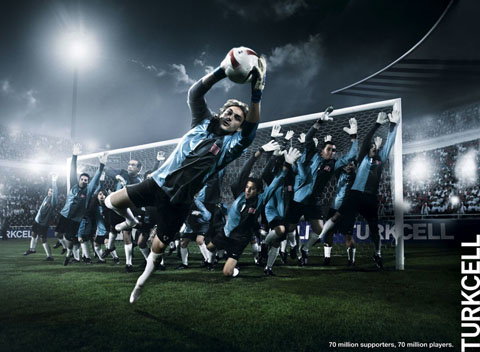
ScienceDaily (Apr. 5, 2012) — Measuring what are known as 'executive functions', which reflect the cognitive ability to deal with sudden problems, may make it possible to predict how good an elite soccer player will become in the future. This has been shown by a new study from Karolinska Institutet. Scientists believe for the first time that they have found the scientific key to what has previously been described as 'game intelligence' in successful soccer players.
It has long been known that physical ability and ball sense are not enough to become really good at soccer. A third vital component has often been mentioned: game intelligence, which is the ability to 'read' the play, to be always in the right place at the right time, and steal goals. Many people have regarded game intelligence to be almost a magical ability, something that is impossible to measure.
The scientists at Karolinska Institutet, however, claim that game intelligence is hardly mystical, and that it can be understood from a scientific perspective. It is, rather, an example of something that cognitive scientists call executive functions, which encompass the ability to be immediately creative, to be able to see new solutions to problems, to change tactics rapidly and to revise previous behaviour that has proved not to work.
"Our brains have specific systems that process information in just this manner, and we have validated methods within cognitive research to measure how well the executive functions work in an individual," says Dr Predrag Petrovic at the Department of Clinical Neuroscience.
Predrag Petrovic and his colleagues report in one study, to be published in the on-line scientific journal PLoS ONE, tests of certain executive functions in soccer players in Allsvenskan (the highest Swedish league) and in Division 1 (the league under Allsvenskan), a total of 57 elite soccer players. The scientists found that soccer players in both groups performed much better in tests of executive functions than the general population. And they found that players in Allsvenskan achieved much better results in these tests than players in Division 1.
The study then compared the test results with the performance of the players on the field. The scientists followed several of the soccer players for some years and recorded the number of goals and the number of assists each player made. In this way, each player was awarded points related to his or hers performance on the field. A clear correlation appeared between the results of the tests of executive functions and the number of points obtained on the soccer field (when corrected for such factors as a player's position and age).
It was thus shown that the best players had also performed best on the tests of executive functions. These results are unique, since they are based on scientifically standardised tests. Previously, researchers have used either specific tests from which it has not been possible to generalise the results, or studied specifically how heading the ball can cause cognitive abilities to deteriorate.
"We can imagine a situation in which cognitive tests of this type become a tool to develop new, successful soccer players. We need to study whether it is also possible to improve the executive functions through training, such that the improvement is expressed on the field. But there is probably a hereditary component, and a component that can be developed by training," says Torbjörn Vestberg, psychologist and a member of the research group that carried out the study.
sábado, 17 de diciembre de 2011
La ciencia lo prueba: Podemos ver con nuestros oídos
La ciencia lo prueba: Podemos ver con nuestros oídos
por Jennifer Abate. Tendencias La Tercera - 17/12/2011.
La razón de éste y otros cruces de nuestros sentidos se origina en el cerebro, que "aprende" que un estímulo suele acompañarse de otro y así reduce trabajo a la hora de interpretar las múltiples sensaciones a las que nos exponemos día a día.
 EL sitio drinkify.org se ha hecho popular gracias a una oferta simple: recomendar el mejor trago para escuchar a un determinado artista. Como una copa de merlot para oír a Frank Sinatra o una vaso de whisky para Led Zeppelin. Lo que esta página web pone en marcha es un curioso principio probado por varias investigaciones: los sonidos son capaces de modificar el sabor de lo que nos llevamos a la boca. Pero, ahora, se sabe que este hallazgo se queda corto. La ciencia ha comprobado que ninguno de nuestros sentidos actúa solo, sino que se complementan para que podamos obtener la sensación más sofisticada a partir de un determinado estímulo.
Una de las primeras pistas sobre este fenómeno la dio un experimento de 2000 realizado en el Caltech (instituto de Tecnología de la Universidad de California), que demostró que cuando las personas eran expuestas a un rayo de luz, acompañado de dos sonidos cortos, muchas declaraban ver dos flash de luz en vez de uno. Lo mismo ocurría cuando, al ver el mismo rayo de luz, se tocaba la piel de los participantes dos veces: veían dos en vez de uno. Otras investigaciones han probado que lo que vemos afecta lo que escuchamos y que los olores también son capaces de afectar la textura de determinados elementos.
El profesor de Neurobiología y Anatomía de la Universidad Wake Forest (EE.UU.) y experto en el tema, Barry Stein, explica a La Tercera que la razón de esto está en que las neuronas reciben estímulos de diferentes sentidos. "Por eso, cuando ocurre un evento que entrega información a través de diferentes canales sensoriales a los que las neuronas tienen acceso, éstas integran la información", dice.
Las ventajas que nos aporta este procesamiento de la información son múltiples: en un mundo que ofrece una cantidad cada vez mayor de sensaciones y estímulos, la "integración multisensorial" acorta el camino y ayuda a precisar la naturaleza de lo que percibimos en el menor tiempo posible. En palabras de Stein:"tiene un valor evolutivo obvio, que permite lidiar con la variedad de eventos que ocurren en la vida cotidiana. Una de las principales tareas del cerebro es agregar eventos e información que debería ir unida, y segregar eventos que no deberían interpretarse juntos. La 'integración multisensorial' es una forma de cumplir con esta tarea, sin siquiera pensar en ello".
Hasta ahora no parece existir una regla específica que determine la forma en que los sentidos se combinan para producir una determinada sensación. Según la doctora Ladan Shams, profesora del Departamento de Sicología de la Ucla, la unión de estos sentidos depende mucho de la tarea específica que se vaya a realizar. Por ejemplo, señala a La Tercera, si la tarea es la percepción de una textura, entonces la visión y el tacto proveen la mayor parte de la información y se combinan para que podamos percibirla. Si la tarea es balancear el cuerpo, entonces la información auditiva, visual y táctil se combinan; si la tarea es la percepción de un determinado discurso, se combinan la audición con la visión.
Ya se han verificado muchos ejemplos de este fenómeno. Según un estudio del profesor Charles Spence, director del Laboratorio de Investigación Intermodal del Departamento de Sicología Experimental de la Universidad de Oxford, la gente interpreta que las papas fritas son más crujientes y sabrosas cuando un fuerte sonido crujiente se escucha a través de los audífonos. Un estudio de este año mostró que la gente piensa que un mousse de frutilla sabe más dulce, más intenso y mejor, cuando viene en un plato blanco que en uno negro.
Aprendido, no heredado
Extrañamente y a pesar de las ventajas que ofrece esta sofisticada forma de percepción, no parece estar determinada por la naturaleza, sino que la desarrollamos y perfeccionamos en la medida en que nos exponemos a experiencias sensoriales del ambiente.
Básicamente, dice Stein, el cerebro aprende que el sonido de una pelota moviéndose y la vista de la misma pelota van juntos. Antes de que se aprenda esto, las dos señales son tratadas como si provinieran de diferentes eventos.
Profundizando en esta determinación cultural, Charles Spence señala a La Tercera que recientemente se ha probado que sólo alrededor de los ocho años los niños comienzan a integrar óptimamente lo que ven y lo que sienten cuando sostienen en la mano un objeto al que además están mirando.
El mismo especialista señala que la cultura determina qué combinación de señales integramos mejor. "Esto es especialmente cierto en el caso de la comida. Por ejemplo, los europeos y los norteamericanos integran mejor el sabor del azúcar con el olor de las almendras, pero no un sabor salado con el olor de las mismas. Anda a Japón y el patrón es inverso".
Es por estos hallazgos que cada vez más empresas han comenzado a incorporar sicólogos y neurocientíficos a sus equipos. La idea es "enganchar" a los consumidores a través de una completa gama de sensaciones.
Pero no sólo la industria se ha visto beneficiada: la doctora Shams señala que esto tiene implicancias muy importantes en la educación, la rehabilitación y la computación. Por ejemplo: "nuestra investigación ha demostrado que un sentido puede facilitar y mejorar el aprendizaje de otro sentido. Esto es relevante para el aprendizaje de los individuos sanos, la rehabilitación de personas son deficiencias sensoriales (como las personas con baja visión o audición dañada), individuos con implantes sensoriales (de retina o cóclea) y la cración de estrategias remediales para individuos con déficit de integración sensorial, como ocurre en el caso del autismo o la dislexia".
domingo, 4 de diciembre de 2011
La Revolución Neuroeconómica
La Revolución Neuroeconómica.
Por Robert Shiller. 21-11-11.
 Los intentos de vincular la neurociencia con la economía son bastante recientes, de modo que la neuroeconomía se halla todavía en una etapa temprana de su desarrollo. Sin embargo, en el nacimiento de esta ciencia puede verse la reiteración de un patrón, ya que es común que las revoluciones científicas surjan de los lugares más inesperados. Cualquier campo científico puede volverse estéril cuando en su horizonte no hay a la vista ideas radicalmente nuevas que probar. Los investigadores pueden quedar de tal modo atrapados en sus métodos (es decir, en el lenguaje y los supuestos metodológicos aceptados dentro de sus disciplinas) que sus investigaciones se vuelven repetitivas o triviales.
Por Robert Shiller. 21-11-11.
 Los intentos de vincular la neurociencia con la economía son bastante recientes, de modo que la neuroeconomía se halla todavía en una etapa temprana de su desarrollo. Sin embargo, en el nacimiento de esta ciencia puede verse la reiteración de un patrón, ya que es común que las revoluciones científicas surjan de los lugares más inesperados. Cualquier campo científico puede volverse estéril cuando en su horizonte no hay a la vista ideas radicalmente nuevas que probar. Los investigadores pueden quedar de tal modo atrapados en sus métodos (es decir, en el lenguaje y los supuestos metodológicos aceptados dentro de sus disciplinas) que sus investigaciones se vuelven repetitivas o triviales.
Pero sucede entonces que alguien que nunca tuvo relación con esos métodos propone de pronto un cambio estimulante, una idea nueva que atrae a investigadores jóvenes (y a algunos pocos iconoclastas de entre los viejos) dispuestos a aprender una ciencia diferente con sus propios métodos de investigación. En cierto punto de este proceso, asistimos al nacimiento de una revolución científica.
La revolución neuroeconómica produjo en los últimos tiempos algunos acontecimientos notables; uno muy digno de destacar ocurrió el año pasado y es la publicación del libro Foundations of Neuroeconomic Analysis, del neurocientífico Paul Glimcher. Su título es una sagaz alusión al título de una obra clásica de Paul Samuelson publicada en 1947, Fundamentos del análisis económico, que contribuyó al despertar de otra revolución anterior en la teoría económica. Ahora mismo, Glimcher está designado en el departamento de economía de la Universidad de Nueva York (también trabaja en el Centro de Neurociencia de la misma universidad).
Pero para la mayor parte de los economistas, es casi como si Glimcher hubiera venido de Marte. Al fin y al cabo, su doctorado lo obtuvo en el departamento de neurociencia de la Facultad de Medicina de la Universidad de Pensilvania. Además, los neuroeconomistas como él se dedican a un tipo de investigación muy alejado de la zona de comodidad intelectual de sus colegas más convencionales, ya que buscan iluminar algunos de los conceptos básicos de la economía vinculándolos con estructuras cerebrales concretas.
Gran parte de las teorías económicas y financieras actuales se basan en el supuesto de que las personas son racionales y que, por ende, buscan sistemáticamente maximizar su propia felicidad; o, para usar el término empleado por los economistas, su “utilidad”. El análisis que hace Samuelson en su libro de 1947 no parte de un examen del interior del cerebro, sino del concepto de “preferencia revelada”. Según esta idea, para descubrir los objetivos de las personas basta observar sus acciones en materia económica. Siguiendo el ejemplo de Samuelson, generaciones de economistas han basado sus investigaciones solamente en el supuesto de racionalidad, sin preocuparse por las estructuras orgánicas subyacentes al pensamiento y al comportamiento.
Eso explica el escepticismo de Glimcher respecto de la teoría económica dominante y su interés en buscarle una base biológica en el cerebro. Lo que Glimcher desea es revelar los mecanismos cerebrales que subyacen a la noción de utilidad, para transformar la teoría “blanda” de la utilidad en una teoría “dura”.
En particular, Glimcher quiere identificar las estructuras cerebrales que procesan ciertos elementos clave de la teoría de la utilidad en situaciones donde las personas se enfrentan a la incertidumbre: “(1) el valor subjetivo; (2) la probabilidad; (3) el producto del valor subjetivo y la probabilidad (valor subjetivo esperado); y (4) un mecanismo neurocomputacional encargado de elegir aquel elemento del conjunto de opciones que tenga el máximo «valor subjetivo esperado»”.
Si bien Glimcher y sus colegas encontraron algunos indicios fascinantes, todavía no han logrado descubrir la mayoría de las estructuras cerebrales básicas. Tal vez la única razón sea que esas estructuras no existen y que la teoría de la maximización de la utilidad es completamente errónea o que, por lo menos, necesita una revisión radical. Si así fuera, este hallazgo bastaría para sacudir a la economía desde sus cimientos.
Otra línea de investigación que entusiasma a los neurocientíficos es la de estudiar cómo enfrenta el cerebro las situaciones ambiguas, aquellas donde las probabilidades no se conocen y falta información muy pertinente. Ya se ha descubierto, por ejemplo, que los problemas donde las probabilidades están claras no se procesan en las mismas regiones del cerebro que los problemas donde son inciertas. Tal vez estas investigaciones nos ayuden a comprender cómo actúan las personas frente a la incertidumbre y el riesgo en determinadas situaciones: por ejemplo, en los mercados financieros en épocas de crisis.
John Maynard Keynes creía que la mayor parte de las decisiones económicas se producen en situaciones ambiguas donde las probabilidades son inciertas. Por eso concluyó que el ciclo económico depende en gran medida de la fluctuación de impulsos que denominó “espíritus animales”: contenidos de la mente que los economistas no comprenden.
Por supuesto, el problema de la economía es que a menudo, para una crisis cualquiera hay tantas interpretaciones como economistas. Las economías son estructuras de gran complejidad cuyo análisis exige entender sus leyes, sus normas, sus prácticas y costumbres comerciales, sus estados financieros y un sinnúmero de otros detalles.
Sin embargo, es probable que llegue el día en que sepamos mucho mejor cómo funcionan (o dejan de hacerlo) las economías, al comprender mejor las estructuras biológicas de las que depende el funcionamiento del cerebro. En estas estructuras (redes de neuronas que se comunican entre sí por medio de axones y dendritas) se basa la difundida analogía entre el cerebro y las computadoras: redes de transistores que se comunican entre sí por medio de líneas de conducción de electricidad. Es inmediato extender la analogía a la economía: una red de personas que se comunican entre sí por medio de conexiones electrónicas y de otros tipos.
El cerebro, la computadora y la economía: tres sistemas cuya función es coordinar las actividades de ciertas unidades individuales (neuronas, transistores o personas) mediante la solución de problemas de información básicos. Cada vez que comprendemos mejor los problemas que resuelve uno cualquiera de esos sistemas (y cómo supera los obstáculos que se le interponen) aprendemos algo valioso sobre los tres.
Robert Shiller, profesor de economía en la Universidad de Yale, es coautor, junto con George Akerlof, de Animal Spirits: cómo influye la psicología humana en la economía.
Copyright: Project Syndicate, 2011.
www.project-syndicate.org
Traducción: Esteban Flamini
www.project-syndicate.org
Traducción: Esteban Flamini
viernes, 11 de noviembre de 2011
Thomas Suarez - iPhone Application Developer. . .and 6th Grader
Thomas Suarez - iPhone Application Developer... and 6th Grader
Thomas Suarez is a 6th grade student at a middle school in the South Bay. Tom been fascinated by computers and technology since before kindergarten. Recently, he's been focused on the development of applications for the iPhone, and has established his own company, CarrotCorp. His most successful ap is one he terms "an anti-Justin-Bieber game" called "Bustin Jieber". "It's is a variation on the Whac-a-Mole theme," he explains.
In the spirit of ideas worth spreading, TED has created a program called TEDx. TEDx is a program of local, self-organized events that bring people together to share a TED-like experience. Our event is called TEDxManhattanBeach, where x = independently organized TED event. At our TEDxManhattanBeach event, TEDTalks video and live speakers will combine to spark deep discussion and connection in a small group. The TED Conference provides general guidance for the TEDx program, but individual TEDx events, including ours, are self-organized.
jueves, 10 de noviembre de 2011
Descubriendo el Cerebro y la Mente N°64 (AE)
Descubriendo el Cerebro y la Mente - N°64.
 Revista gratuita de neurociencias y ciencias afines.
Editor: AE, Asociación Educar - Argentina.
Descarga.
 Revista gratuita de neurociencias y ciencias afines.
Editor: AE, Asociación Educar - Argentina.
Descarga.
Artículos:
- La importancia de poseer una filosofía de vida personal.
- La verdad de las mentiras.
- El sentido del humor es diferente en mujeres y hombres.
- Sistemas Emocionales: "El pronóstico meteorológico" de nuestras conductas.
- No dormir altera nuestra capacidad de tomar decisiones.
- El aprendizaje depende de dos zonas separadas del cerebro.
- Aprender nos debe llevar toda la vida.
- En grupo nuestra visión personal cambia y con ella la toma de decisiones que hacemos.
Neurociencias y Neurosicoeducación:
Neuroeducación:
Neuroeconomía:
Notas y artículos:
Dr. Nse. Carlos Logatt Grabner, Dr. Prof. Mario Vestfrid, Dr. Roberto Rosler,
Nse. Marita Castro, Lic. Mariela Vestfrid.
Dr. Nse. Carlos Logatt Grabner, Dr. Prof. Mario Vestfrid, Dr. Roberto Rosler,
Nse. Marita Castro, Lic. Mariela Vestfrid.
Suscribirse a:
Entradas (Atom)