Richard Dawkins' brilliant reformulation of the theory of natural selection has the rare distinction of having provoked as much excitement and interest outside the scientific community as within it. His theories have helped change the whole nature of the study of social biology, and have forced thousands of readers to rethink their beliefs about life.
In his internationally bestselling, now classic volume, The Selfish Gene, Dawkins explains how the selfish gene can also be a subtle gene. The world of the selfish gene revolves around savage competition, ruthless exploitation, and deceit, and yet, Dawkins argues, acts of apparent altruism do exist in nature. Bees, for example, will commit suicide when they sting to protect the hive, and birds will risk their lives to warn the flock of an approaching hawk.
This revised edition of Dawkins' fascinating book contains two new chapters. One, entitled "Nice Guys Finish First," demonstrates how cooperation can evolve even in a basically selfish world. The other new chapter, entitled "The Long Reach of the Gene," which reflects the arguments presented in Dawkins' The Extended Phenotype, clarifies the startling view that genes may reach outside the bodies in which they dwell and manipulate other individuals and even the world at large. Containing a wealth of remarkable new insights into the biological world, the second edition once again drives home the fact that truth is stranger than fiction.

Mostrando entradas con la etiqueta philosophy. Mostrar todas las entradas
Mostrando entradas con la etiqueta philosophy. Mostrar todas las entradas
jueves, 4 de abril de 2013


domingo, 22 de abril de 2012
Día de la Tierra
Día de la Tierra 2012.


Qué! 22/04/2012. El 22 de abril es el Día de la Tierra, una celebración con más de 40 años a sus espaldas, que pretende concienciar sobre la inviabilidad del modelo de desarrollo actual, pues, según recuerdan en Ecologistas en Acción, serían necesarios varios planetas para que pudiéramos mantener nuestro nivel de consumo actual.
El Día de la Tierra, que se celebra cada 22 de abril desde hace 42 años, es una jornada cuyo objetivo es reflexionar sobre la inviabilidad de nuestro modelo de desarrollo actual. Así, según explican en Ecologistas en Acción, se necesitarían varios planetas para que pudiéramos mantener nuestro nivel de consumo. Para la organización ecologista, es imprescindible que nos ajustemos a los límites que marca nuestro territorio y que hagamos un reparto equitativo de los recursos disponibles.
Hace ya 42 años, en 1970, una gran cantidad de ciudadanos y ciudadanas estadounidenses se movilizaron para alertar sobre la fragilidad del planeta. Esta gran movilización, que se considera como el nacimiento del actual movimiento ecologista, fue bautizada con el nombre de Día de la Tierra (Earth Day).
Desde entonces se ha venido dando un fenómeno paradójico. Por un lado, cada vez existe más información y evidencia sobre la sobreexplotación a la que estamos sometiendo a los recursos naturales de nuestro planeta. Pero, por otro, esta utilización de los recursos no deja de crecer, al tiempo que el reparto de su utilización es cada vez más desigual e injusto, tanto entre los diferentes países como en el interior de cada Estado.
Los estudios científicos no dejan lugar a dudas: en los últimos 40 años hemos perdido el 30% de la biodiversidaddel planeta mientras que hemos duplicado nuestra demanda de recursos naturales. Hace ya mucho tiempo que la Tierra no dispone de suficientes recursos como los que dilapidamos cada año, por lo que nuestro consumo reciente se hace a costa no solo de lo que produce cada año el planeta, sino de sus reservas, dejando a las generaciones futuras un territorio cada vez más empobrecido y contaminado.
Los problemas vienen tanto del lado de las fuentes de los recursos -pérdida de bosques, agotamiento de caladeros de pesca, pico del petróleo, pérdida de suelos fértiles, etc.- como de los sumideros a los que arrojamos nuestros residuos -exceso de CO2 en la atmósfera lo que genera cambio climático, contaminación de suelos, de las aguas continentales y océanos, etc.-. El único camino posible para que nuestra existencia sea viable es, pues, la reducción de nuestra huella ecológica, la disminución drástica del uso de recursos naturales, el que nos ajustemos a los límites físicos de nuestro territorio.
Pero Ecologistas en Acción quiere recordar que no basta con reducir nuestro consumo de recursos. Tan importante como ello es que hagamos un reparto equitativo de estos recursos. De hecho, el injusto reparto de la riqueza, aparte de ser inadmisible desde un punto de vista ético y moral, ocasiona una gran cantidad de problemas ambientales, bien por consumo excesivo, bien en el otro extremo por generar degradación ambiental para tratar de sobrevivir.
Como cada año, el domingo 22 de abril se llevarán a cabo numerosas actividades para celebrar esta significada fecha.
jueves, 4 de agosto de 2011
The Network Society - Manuel Castells
 The Network Society: a cross-cultural perspective.
Manuel Castells - one of the world's pre-eminent social scientists - has drawn together a stellar group of contributors to explore the patterns and dynamics of the network society in its cultural and institutional diversity. The book analyzes the technological, cultural and institutional transformation of societies around the world in terms of the critical role of electronic communication networks in business, everyday life, public services, social interaction and politics. The contributors demonstrate that the network society is the new form of social organization in the Information age, replacing the Industrial society.
Open publication - Free publishing - More cultural
The book analyzes processes of technological transformation in interaction with social culture in different cultural and institutional contexts: the United States of America, the United Kingdom, Finland, Russia, China, India, Canada, and Catalonia. The topics examined include business productivity, global financial markets, cultural identity, the uses of the Internet in education and health, the anti-globalization movement, political processes, media and identity, and public policies to guide technological development. Taken together these studies show that the network society adopts very different forms, depending on the cultural and institutional environments in which it evolves. The Network Society is an outstanding and original volume of direct interest in academia - particularly in the fields of social sciences, communication studies, and business schools - as well as for policymakers engaged in technological policy and economic development. Business and management experts will also discover much of value to them within this book.
lunes, 27 de junio de 2011
Pseudoprofundity Recipes for faking profundity—aspiring gurus take note
Pseudoprofundity
Recipes for faking profundity—aspiring gurus take note.
Published on June 22, 2011 by Stephen Law, Ph.D. in Believing Bull.
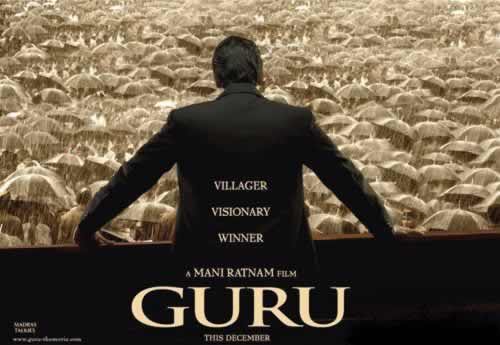 Around the globe, audiences sit at the feet of marketing experts, life-style consultants, mystics, cult-leaders and other "gurus" waiting for the next deep and profound insight. People often pay a great deal of money to hear these words of wisdom. So how do these elevated individuals come by their penetrating insights? What is the secret of their profundity? Unfortunately, in some cases, the audience is duped by the dark arts of pseudo-profundity.
The art of sounding profound is fairly easily mastered. You too can make deep- and meaningful-sounding pronouncements if you are prepared to follow a few simple rules.
First, try stating the incredibly obvious. Only do it v-e-r-y s-l-o-w-l-y, with a sort of knowing nod. This works particularly well if your remark has something to do with one of the big themes of life, love, death and money. Here are some examples:
Death comes to us all
We all want to be loved
Money is used to buy things
Try it yourself. If you state the obvious with sufficient gravitas, following up with a pregnant pause, you may soon find others start to nod in agreement, perhaps muttering "How true that is".
Now that you have warmed up, let's move on to a different technique - the use of jargon. A few big, not fully understood words can easily enhance the illusion of profundity. All that's required is a little imagination.
To begin with, try making up some words that have similar meanings to certain familiar terms, but that differ from them in some subtle and never-fully-explained way. For example, don't talk about people being happy or sad, but about people having "positive or negative attitudinal orientations". That sounds far more impressive and scientific-sounding, doesn't it?
Now try translating some dull truisms into your newly invented language. For, example, the obvious fact that happy people tend to make other people happier can be expressed as "positive attitudinal orientations have high transferability".
Also, whether you are a business guru, cult-leader or a mystic, it always helps to talk of "energies" and "balances". This makes it sound as if you have discovered some deep mechanism or power that could potentially be harnessed and used by others. That will make it much easier to convince people that if they don't buy into your advice, they will really be missing out. For example, publish an article entitled "Harnessing positive attitudinal energies within the retail environment", and Lo! another modern business guru is born.
Finally, if someone does get up the courage to ask exactly what a "positive attitudinal energy" is, you can always give a definition using other bits of your newly-invented jargon, leaving your questioner none the wiser. If all your jargon is defined using other jargon, no one will ever be able to figure out exactly what you mean (though your devotees may think they know). And the fact that buried within your pseudo-profundities are one or true truisms will give your audience the impression that you must really be on to something, even if they don't quite understand what it is. So they will be eager to hear more.
Unfortunately, some cult-leaders, business gurus, mystics, life-style consultants, therapists - and even some philosophers - make use of these techniques to generate the illusion that they possess deep and penetrating insights. Now you can see how easy it is to generate pseudo-profundities of your own, I'm sure you will be rather less impressed the next time some self-styled "guru" suggests that your attitudinal energies need balancing.
Another secret of pseudo-profundity is to pick two words that have opposite or incompatible meanings, and combine them cryptically, like so:
Sanity is just another kind of madness
Life is a often a form of death
The ordinary is extraordinary
Life is a often a form of death
The ordinary is extraordinary
Try it for yourself. You'll soon start sounding deep. In George Orwell's novel Nineteen-Eighty Four, the three slogans of the Party are all examples of this sort of pseudo-profundity:
War is peace
Freedom is slavery
Ignorance is strength
Freedom is slavery
Ignorance is strength
A particularly useful feature of these remarks is that they make your audience do all the work for you. "Freedom is a kind of slavery" for example, is interpretable in all sorts of ways that probably won't even have occurred to you. Just sit back, adopt a sage-like expression, and let your audience figure out what you mean.
None of this is to say that such cryptic remarks can't be profound, of course. But given the ease with which they are generated, it's wise not to be too easily impressed.
domingo, 19 de junio de 2011
Psicología de la Educación Virtual - César Coll
Psicología de la Educación Virtual - César Coll (2008).
 Psicología de la educación virtual versa sobre la educación y el aprendizaje en entornos virtuales al tiempo que se sitúa de forma clara y explícita en el ámbito de la psicología, y más concretamente, de la psicología de la educación. En el transcurso de las dos o tres últimas décadas ha habido una producción relativamente abundante, tanto en castellano como en otras lenguas, de libros que tratan temas relacionados con la educación y las tecnologías de la información y
la comunicación (TIC) desde perspectivas epistemológicas, teóricas y disciplinares diversas.
Cuando se analiza en su conjunto puede constatarse que esta producción responde de forma mayoritaria a preocupaciones y planteamientos de tipo sociológico, tecnológico o didáctico, y que las aproximaciones y los análisis psicológicos son más bien escasos. El objetivo de esta obra es contribuir a compensar esta carencia mediante la adopción de un punto de vista psicológico en el estudio de los procesos educativos que tienen lugar en entornos sustentados, total o parcialmente, en la utilización de tecnologías digitales de la información y la comunicación.
Psicología de la educación virtual versa sobre la educación y el aprendizaje en entornos virtuales al tiempo que se sitúa de forma clara y explícita en el ámbito de la psicología, y más concretamente, de la psicología de la educación. En el transcurso de las dos o tres últimas décadas ha habido una producción relativamente abundante, tanto en castellano como en otras lenguas, de libros que tratan temas relacionados con la educación y las tecnologías de la información yla comunicación (TIC) desde perspectivas epistemológicas, teóricas y disciplinares diversas.
Cuando se analiza en su conjunto puede constatarse que esta producción responde de forma mayoritaria a preocupaciones y planteamientos de tipo sociológico, tecnológico o didáctico, y que las aproximaciones y los análisis psicológicos son más bien escasos. El objetivo de esta obra es contribuir a compensar esta carencia mediante la adopción de un punto de vista psicológico en el estudio de los procesos educativos que tienen lugar en entornos sustentados, total o parcialmente, en la utilización de tecnologías digitales de la información y la comunicación.
sábado, 18 de junio de 2011
Modernidad y Posmodernidad - Armando Roa
martes, 17 de mayo de 2011
Hawking: Afterlife a 'fairy story'
Hawking: Afterlife a 'fairy story'.
Published: May 16, 2011. UPI.com
 CAMBRIDGE, England, May 16 (UPI) -- Stephen Hawking, Britain's most eminent scientist, says a belief in a heaven or an afterlife is a "fairy story" for people afraid of death.
In a rejection of religious comforts, Hawking said there is nothing beyond the moment when the brain dies.
Hawking has suffered since the age of 21 from motor neuron disease, an incurable illness that was expected to kill Hawking within a few years of its symptoms arising.
"I have lived with the prospect of an early death for the last 49 years," Hawking told The Guardian. "I'm not afraid of death, but I'm in no hurry to die. I have so much I want to do first.
"I regard the brain as a computer which will stop working when its components fail. There is no heaven or afterlife for broken down computers; that is a fairy story for people afraid of the dark," he said.
Hawking's latest comments follow those laid out in his 2010 book, "The Grand Design," in which he said there is no need for a creator to explain the existence of the universe.
The book provoked outrage from some religious leaders.
domingo, 1 de mayo de 2011
Creatividad y Método: Hipertexto Rizomático. - F.J. Campos Roselló
 Este libro propone un esquema de pensamiento no dimensional, y seducir al lector en un viaje, una odisea de la mirada que sea creación del propio camino (methodos).
El libro como caja de herramientas, una mirada donde creatividad y método no sólo no se oponen sino que confluyen en la generación de espacios de libertad, que nos permitan apropiarnos de la vida, la más compleja obra de arte efímero.
La vida como creación del método, la vida como método de creación de las posibilidades de libertad.
Leer
Download
Leer
Download
viernes, 29 de abril de 2011
Foucault y la Educación - J.S. Ball
Foucault y la Educación - J.S. Ball.
 Este libro es el primero en explorar en profundidad las principales ideas y conceptos de FOUCAULT sobre las cuestiones y contextos educativos. Se argumenta en él que las instituciones escolares, al igual que las prisiones y manicomios, están preocupadas fundamentalmente por la regulación moral y social; utilizan para ello complejas tecnologías de poder y control disciplinario y se apoyan también en la arbitrariedad típica de las modernas instituciones.
Este libro es el primero en explorar en profundidad las principales ideas y conceptos de FOUCAULT sobre las cuestiones y contextos educativos. Se argumenta en él que las instituciones escolares, al igual que las prisiones y manicomios, están preocupadas fundamentalmente por la regulación moral y social; utilizan para ello complejas tecnologías de poder y control disciplinario y se apoyan también en la arbitrariedad típica de las modernas instituciones.miércoles, 27 de abril de 2011
¿Qué es la filosofía de la tecnología? - Carl Mitcham
 CARL MITCHAM: ¿QUÉ ES LA FILOSOFÍA DE LA TECNOLOGÍA? constituye uno de los primeros intentos serios de delimitar de forma sistemática el ámbito de la filosofía de la tecnología. Esta disciplina, relativamente nueva, está adquiriendo durante los últimos años un empuje creciente, debido fundamentalmente al gran impacto social, cultural y ambiental de los últimos desarrollos científico-tecnológicos.
El hecho de que la filosofía dela tecnología sea, más que el resultado de circunstancias académicas, la respuesta a los problemas planteados por la ciencia y la tecnología contemporáneas en nuestro mundo, le confiere un especial valor de actualidad y la distingue con claridad de otras corrientes filosóficas de orientación más clásica, enfrascadas, por lo general, en cuestiones de tipo interno.
Descarga
Leer:
Suscribirse a:
Entradas (Atom)